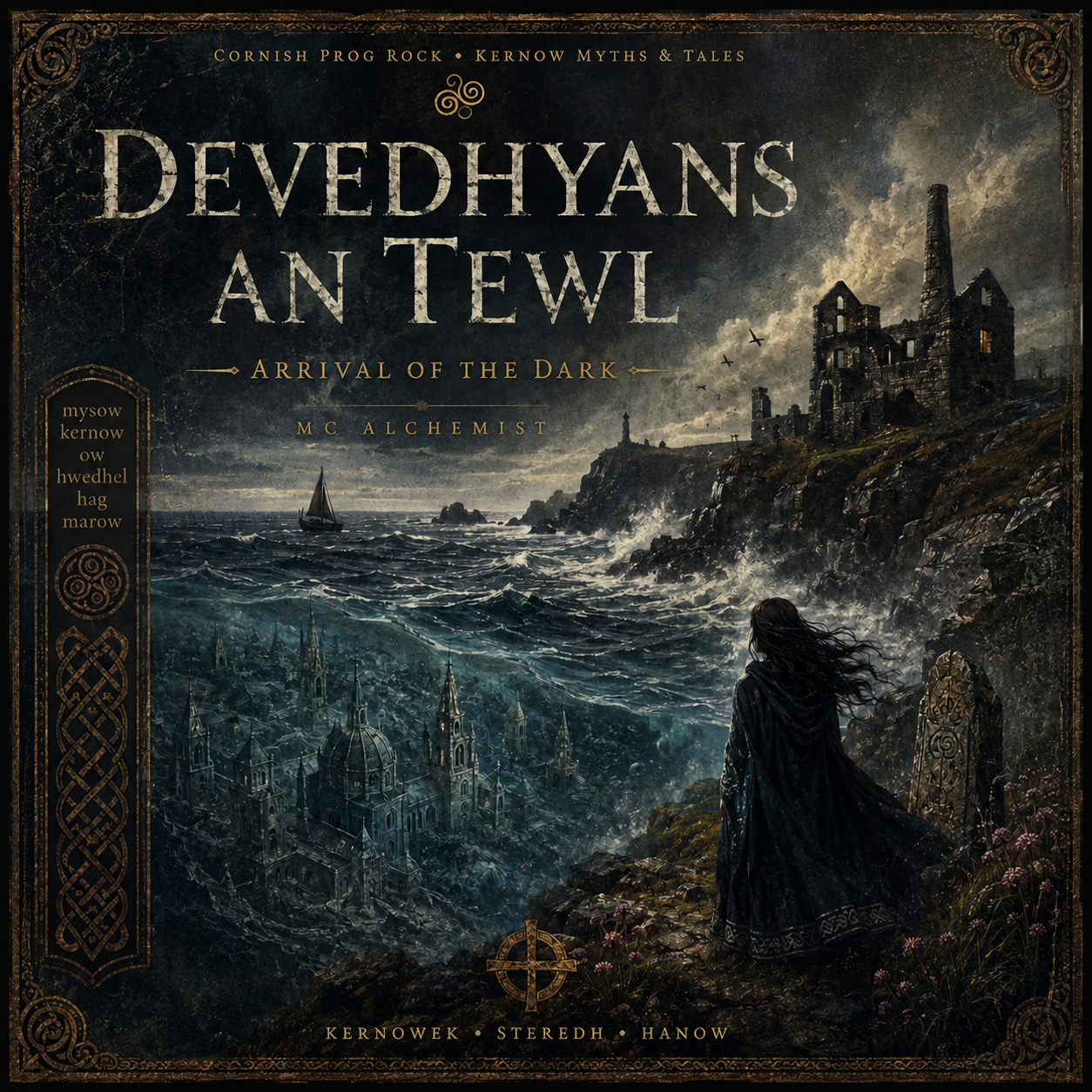
A dark Cornish prog-folk descent through creation, spirit-chests, Lyonesse, Zennor’s mermaid, Bucca storms, knockers in the deep earth, and the Death-Coach crossing the grey roads of night.
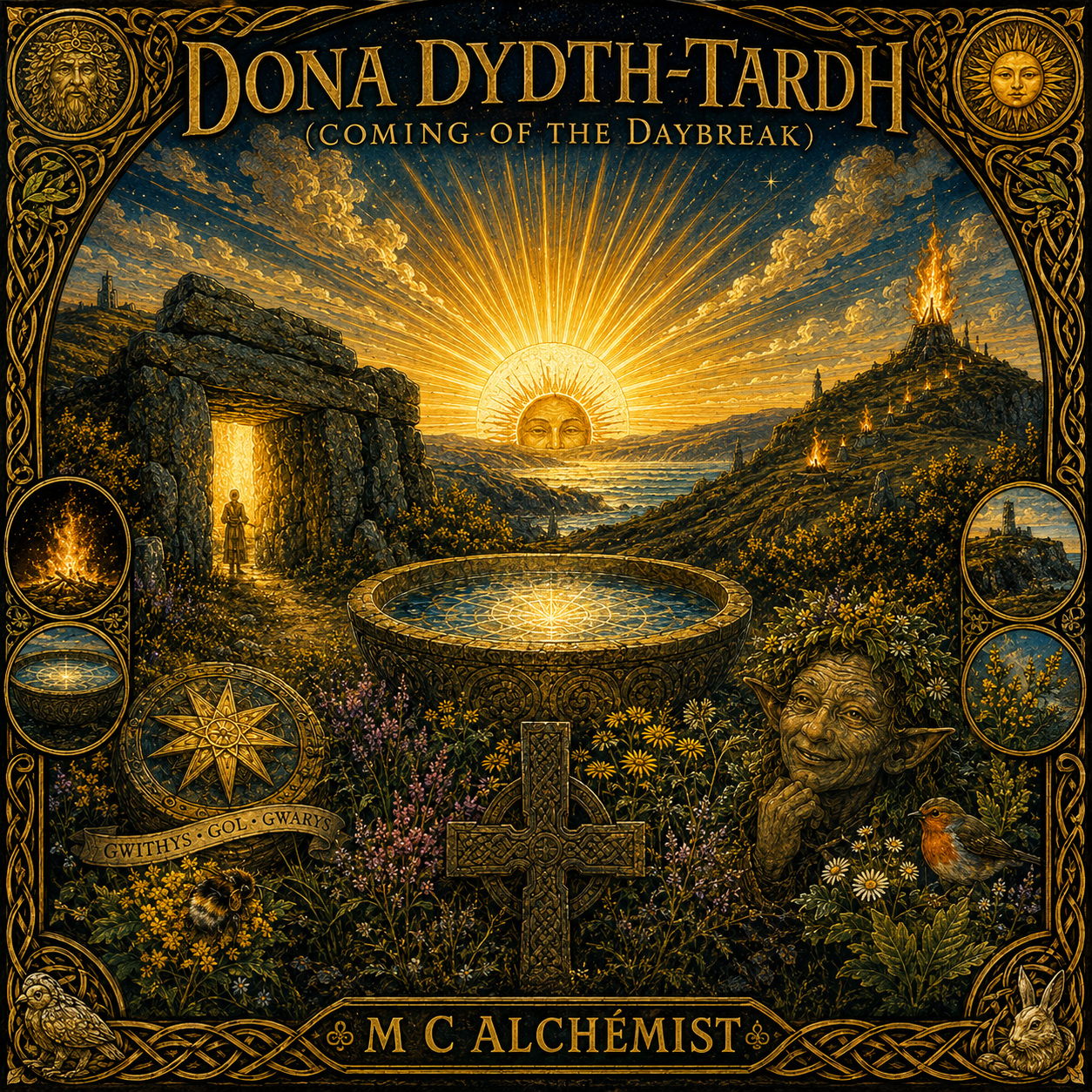
The answering solar volume: rising sun, Men-an-Tol passage, Golowan fires, sun-broth, high hills, summer honey, merry guardians, Piskey portals, and the returning splendor of light.
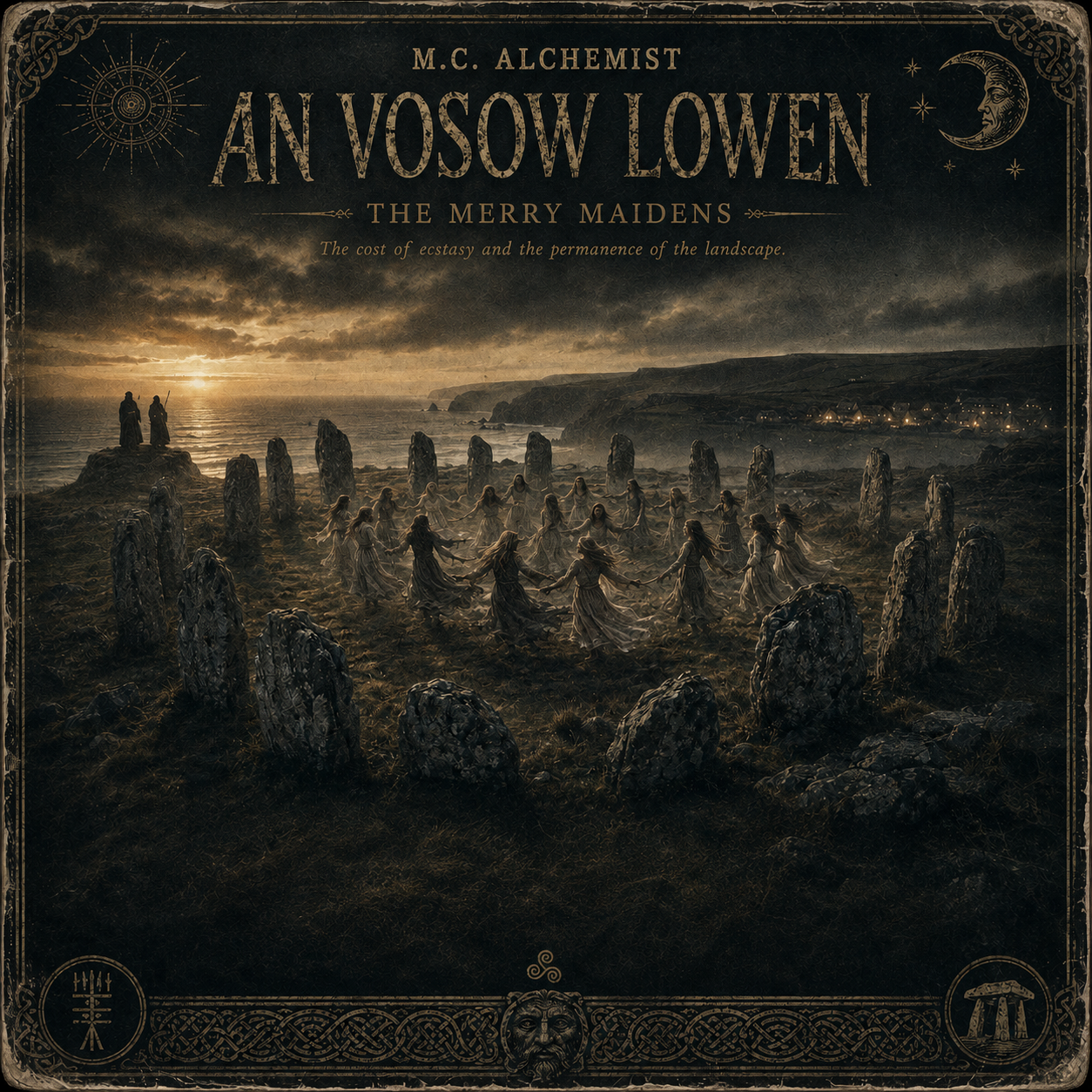
This third volume of The Cornish Cycle gathers the Merry Maidens transmission: twilight, pipers, village lights, forbidden dancing, midnight warning, sudden stillness, hardening blood, the two pillars, and the field that remembers.
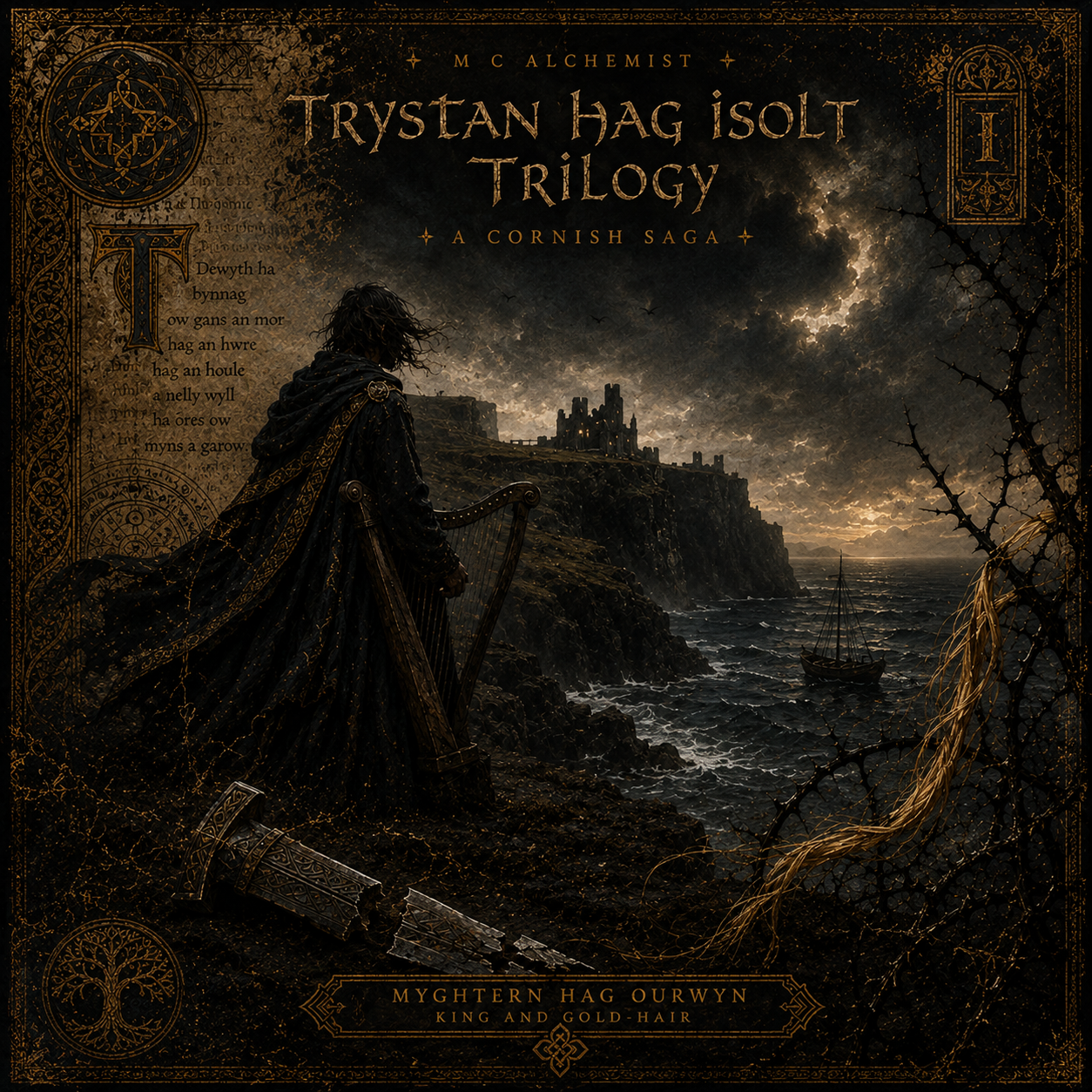
The first volume of the Trystan Hag Isolt Trilogy gathers the opening movements of the old Cornish saga: war in Lyonesse, the birth of Tristan, Tintagel, the tribute of Ireland, the Morholt duel, exile upon the sea, the dragon of Wexford, the golden hair, and the vow that begins the long tragedy.
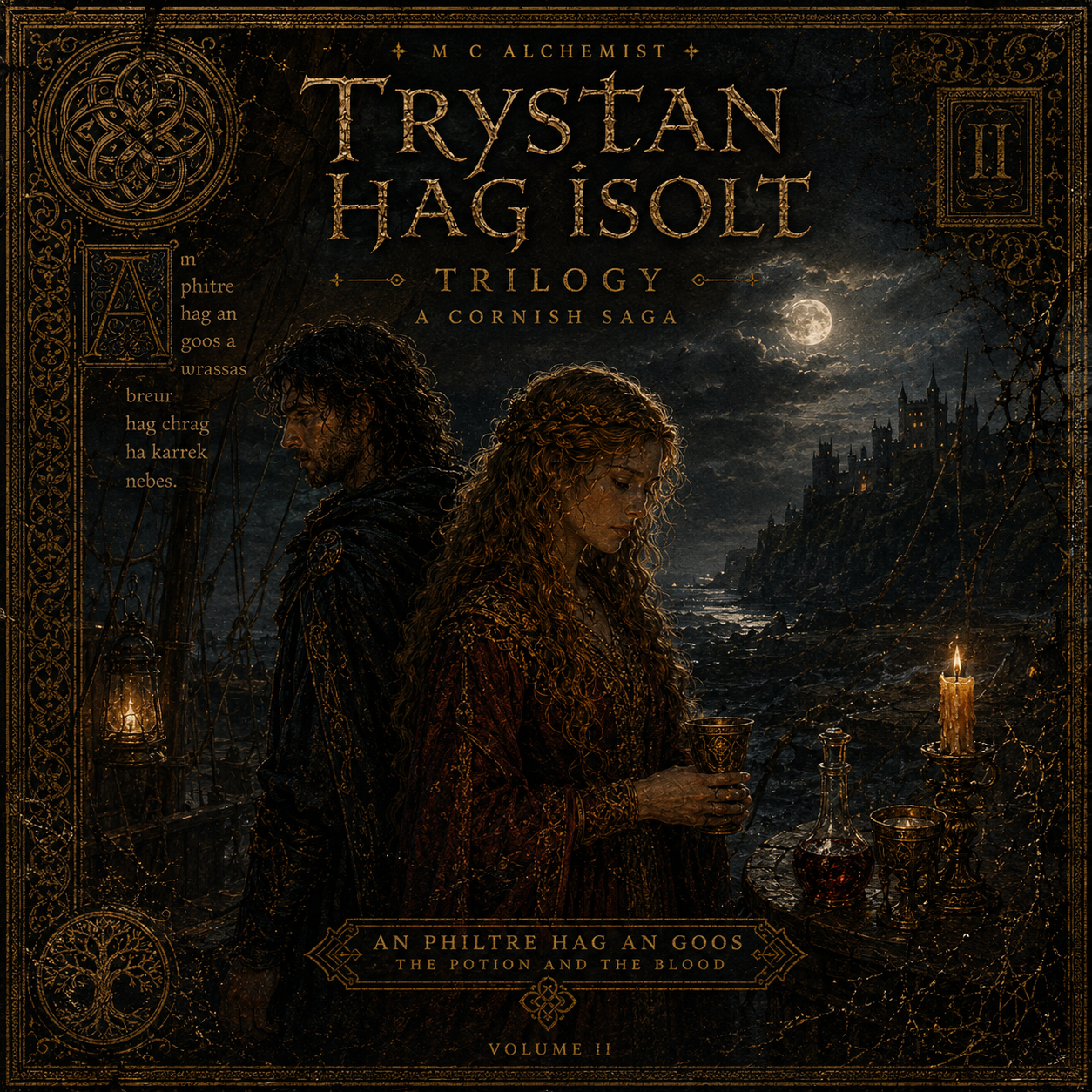
The second volume of the Trystan Hag Isolt Trilogy follows the deepening tragedy after the sea-voyage from Ireland: the drinking of the philtre, the binding of Tristan and Iseult, the whispering barons, the exile in Morois, blood upon the flour, the king’s grief, and the slow turning toward repentance.
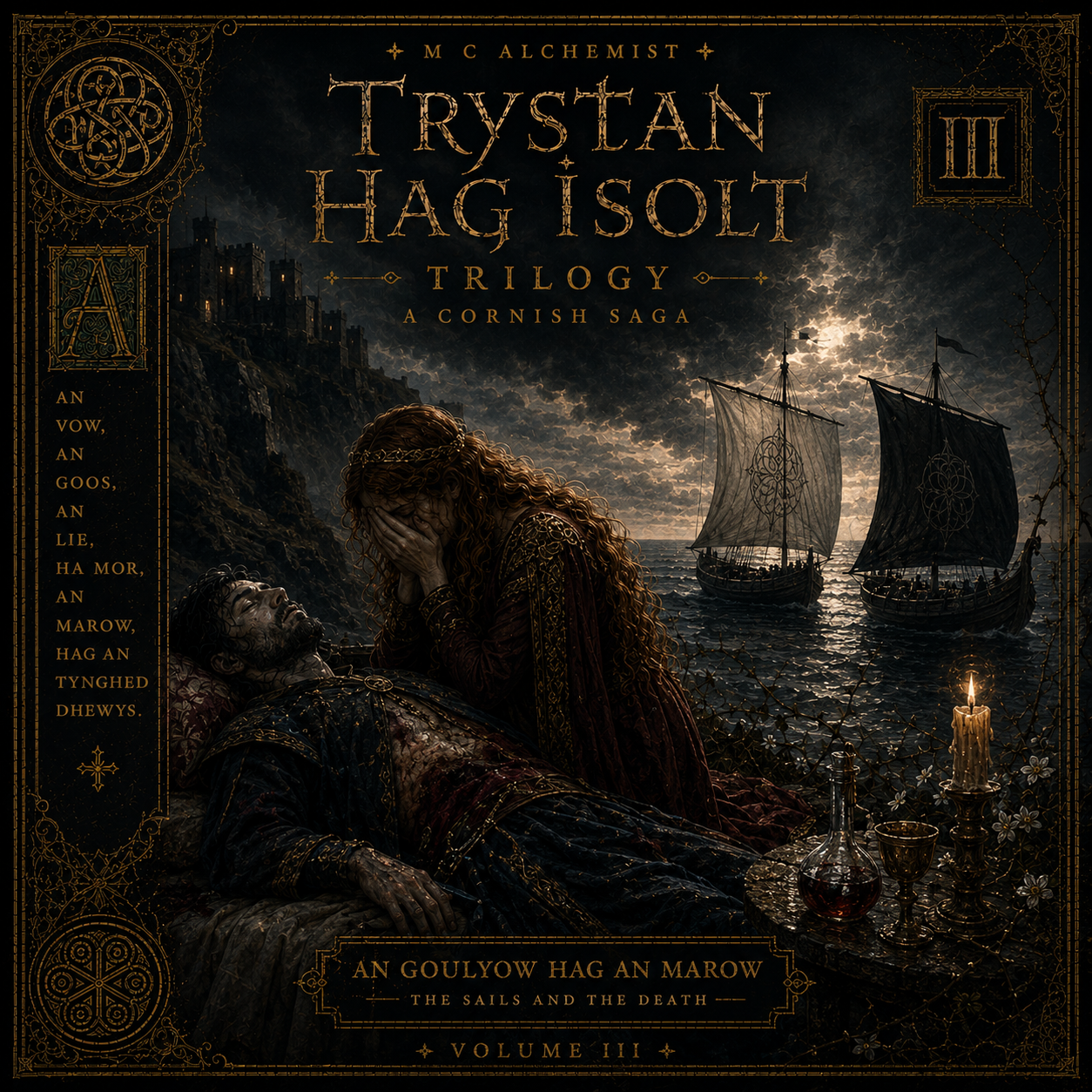
The final volume of the Trystan Hag Isolt Trilogy follows the closing descent of the old Cornish saga: Brittany, exile, divided love, disguise beneath madness, the poisoned wound, the white and black sails, death beside the western sea, and the briar that binds the lovers beyond the grave.
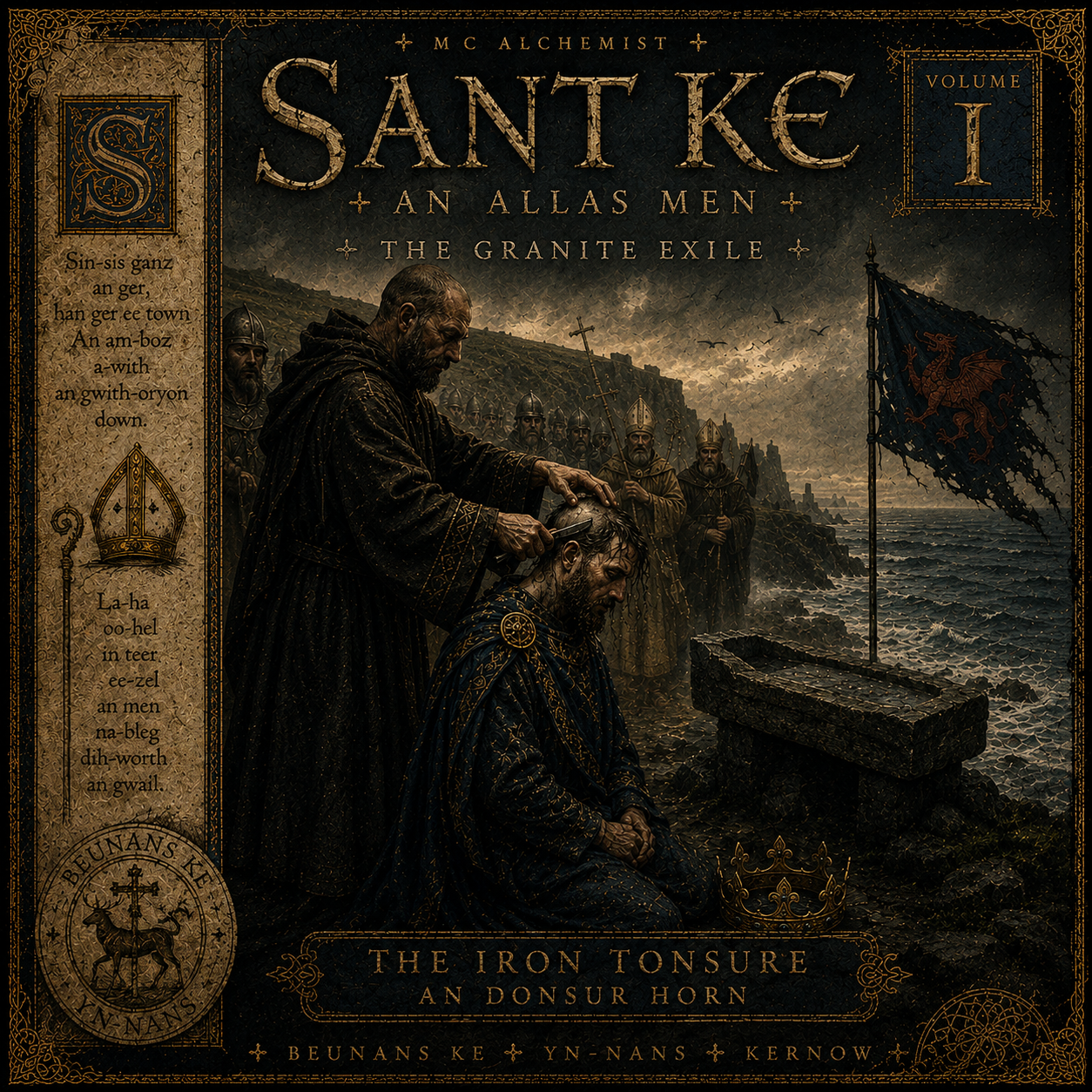
The first volume of the Saint Ke Trilogy chronicles the collapse of earthly authority and the beginning of exile.
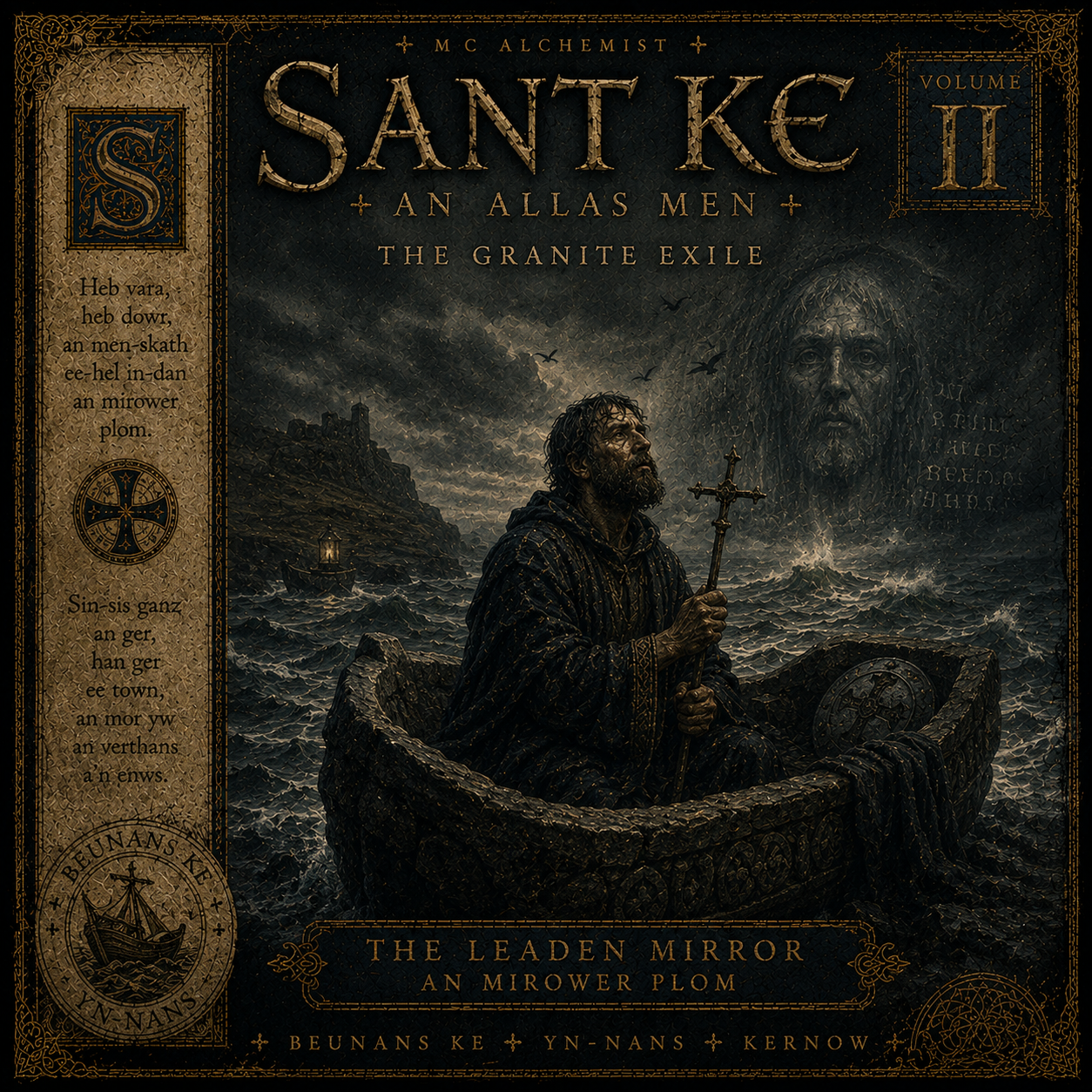
The second volume of the Saint Ke Trilogy chronicles the impossible voyage that follows the exile from Gwent.
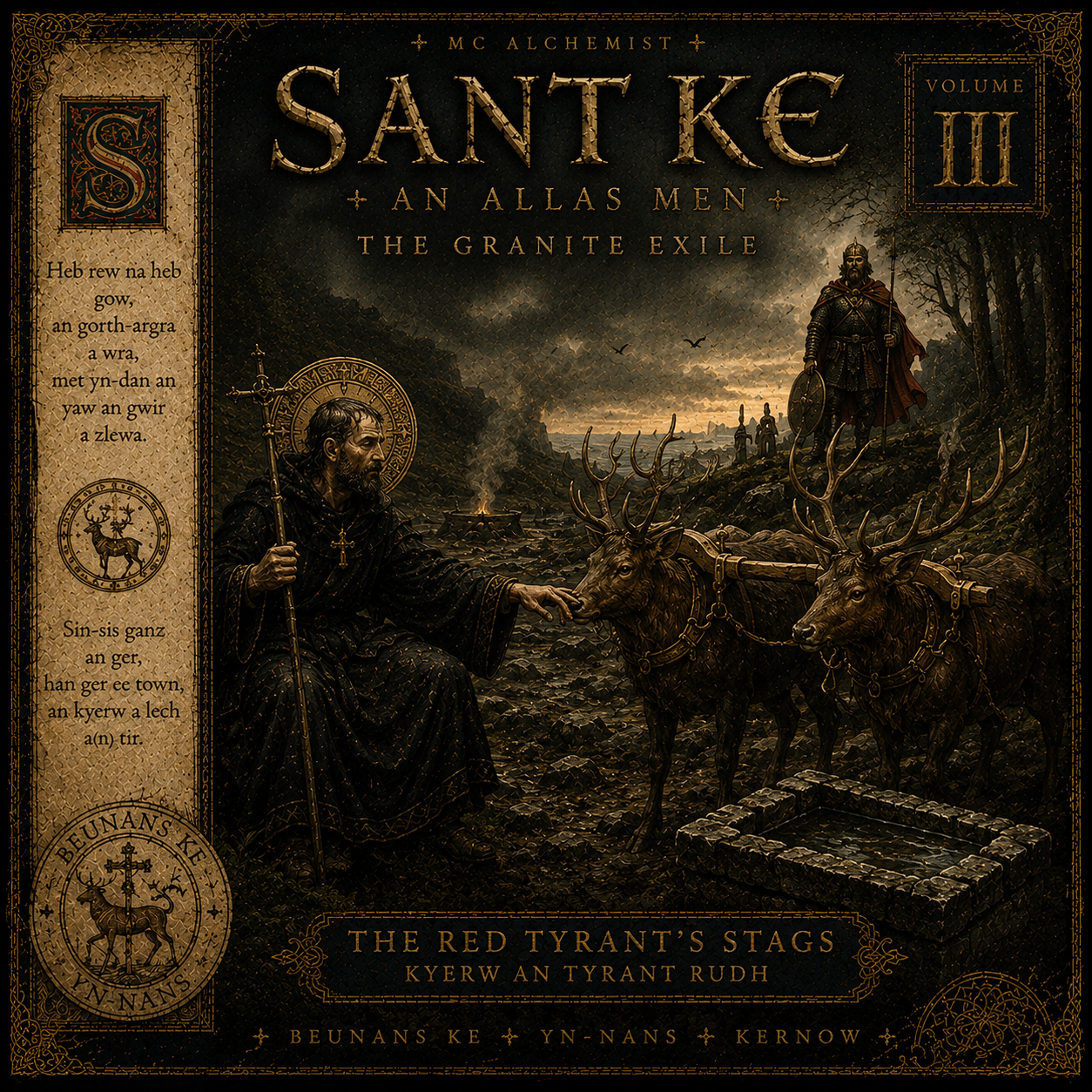
The third volume of the Saint Ke Trilogy brings the exile out of the sea and onto Cornish soil. The voyage has ended, but the trial has not. Ke stands among stone, earth, furze, and hostile power. The altar becomes testimony. The cell becomes labour. The Red King, Teudar, becomes the force that must be faced.
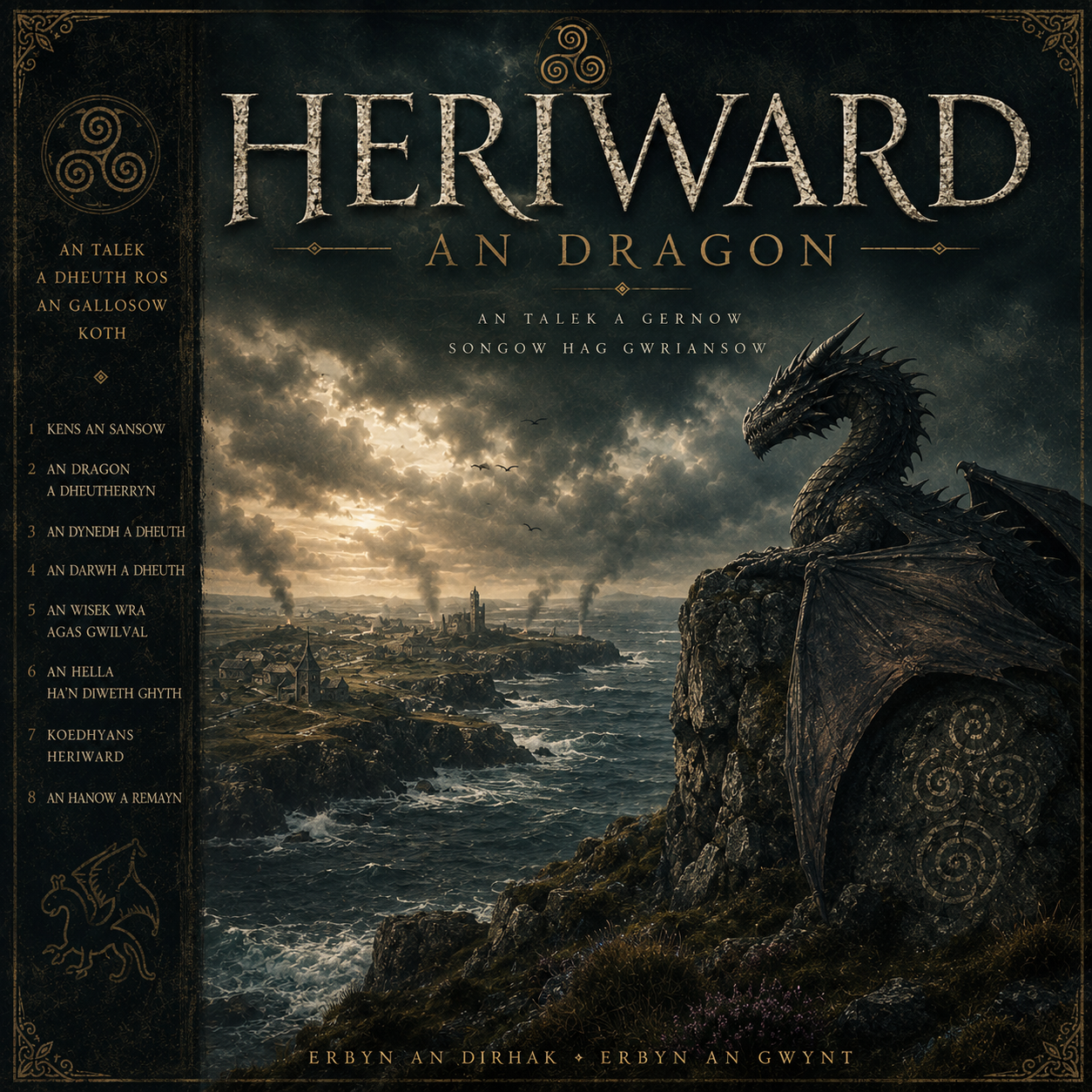
A reconstructed Cornish folklore album from the fragments of a lost dragon tale: old powers before the saints, the western land, the coming of men, the Burning Years, the Wise Woman of Gulval, the Hunt, the Fall, and the name that remains.
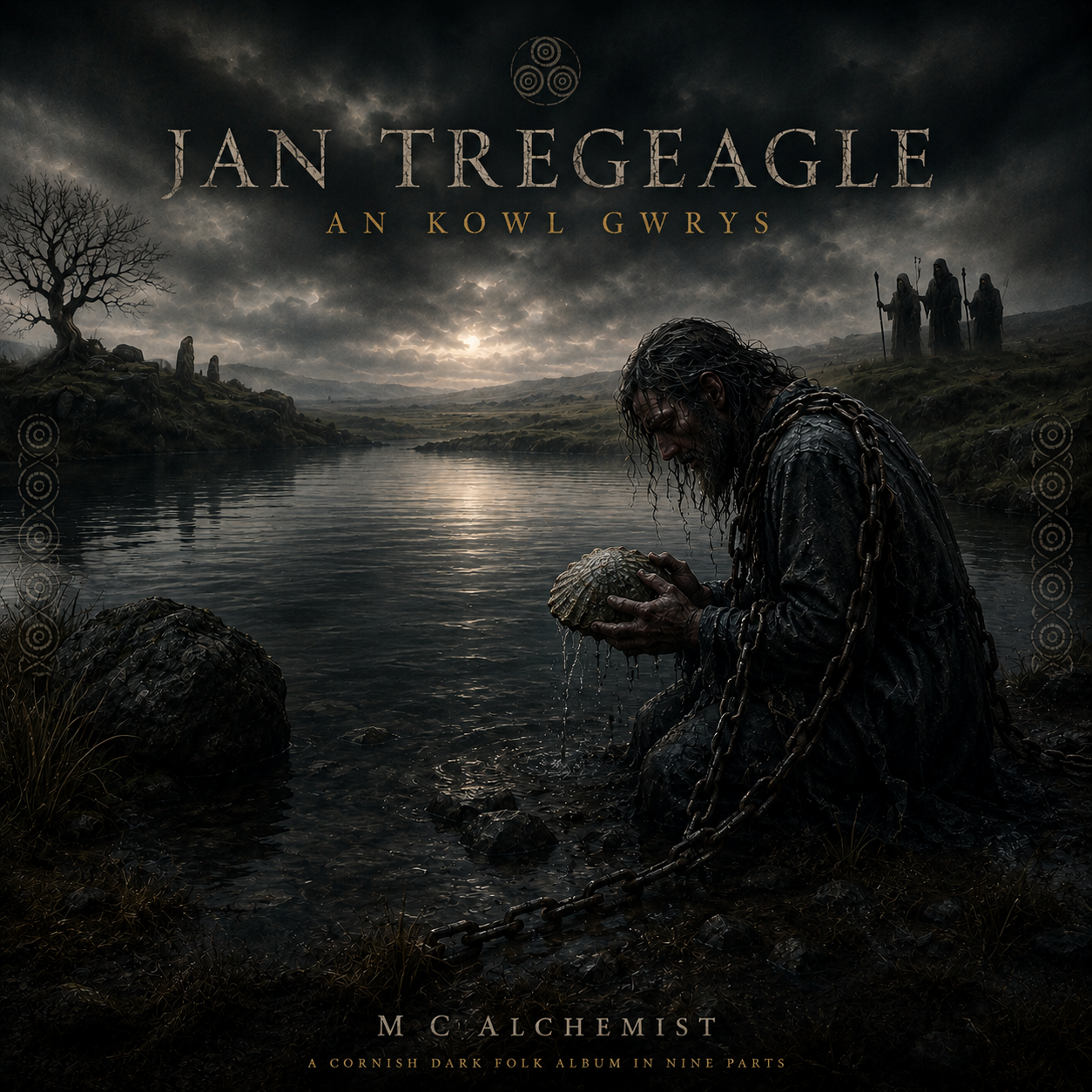
A Cornish folklore album following the fate of Jan Tregeagle: forged charters, dark bargains, judgement, Dozmary Pool, the leaking limpet shell, Roche Rock, the failed escape, and the slow erasure of a name beneath dark water.
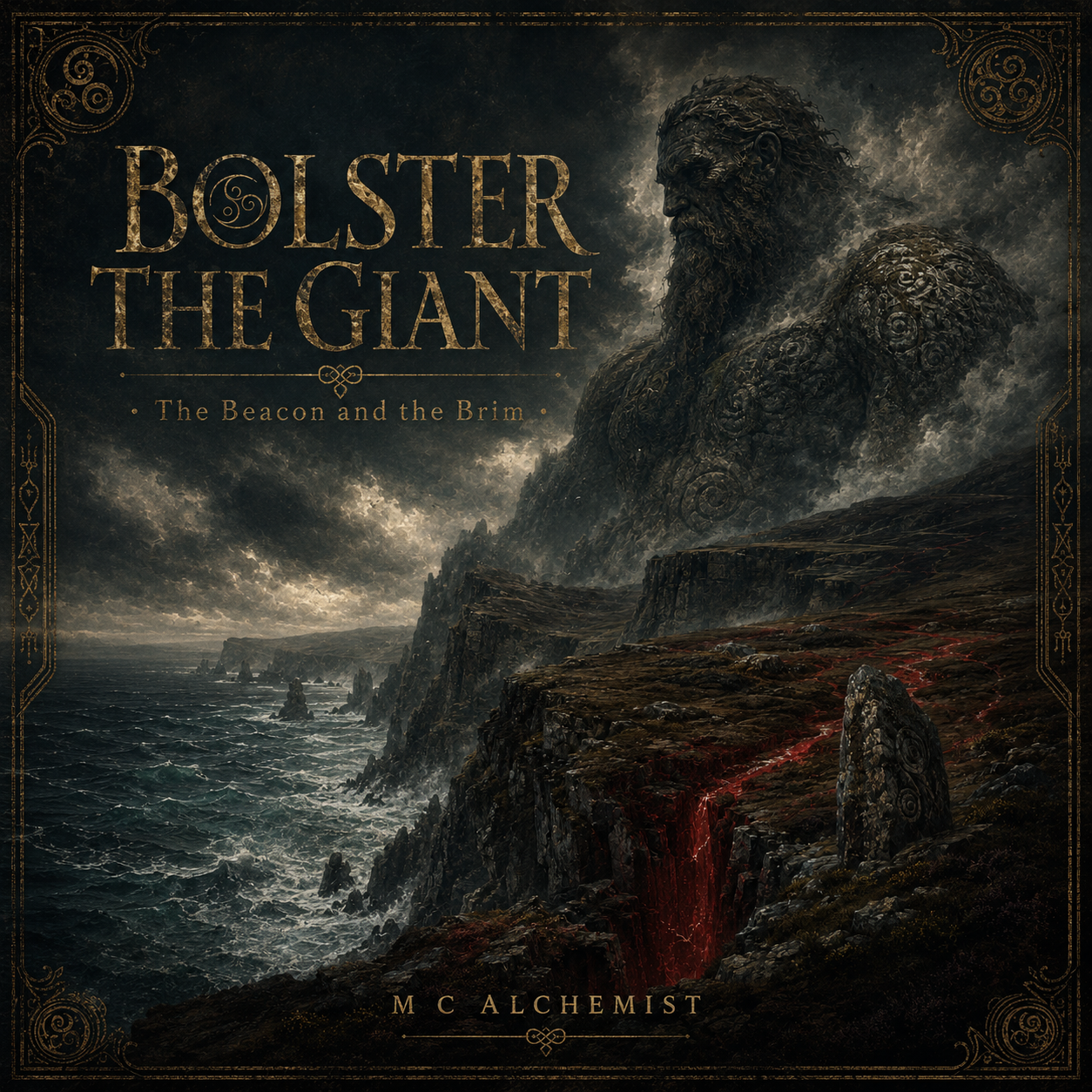
A dark Cornish folklore album from the cliffs of St Agnes and Chapel Porth: the giant’s shadow over the parish, the heavy year of tribute, Agnes at the chapel, the bargain in the stone, the red cliff, and the old stain remembered beneath modern footsteps.
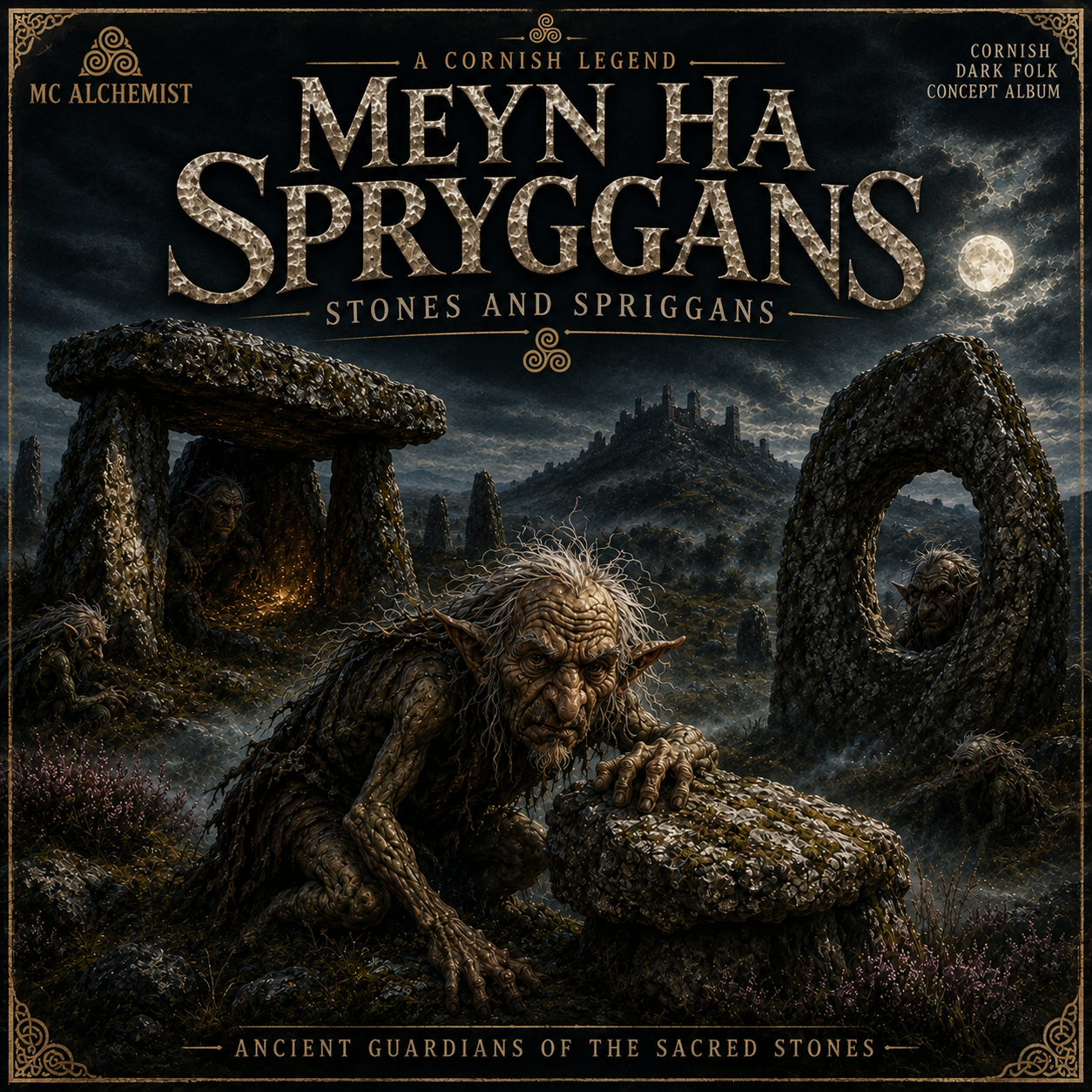
Spriggans have often been reduced to mischievous goblins in later retellings. This album returns them to an older place in Cornish folklore: wizened guardians of sacred stones, buried mineral wealth, forgotten tracks, and the giant memory held beneath the granite moors.
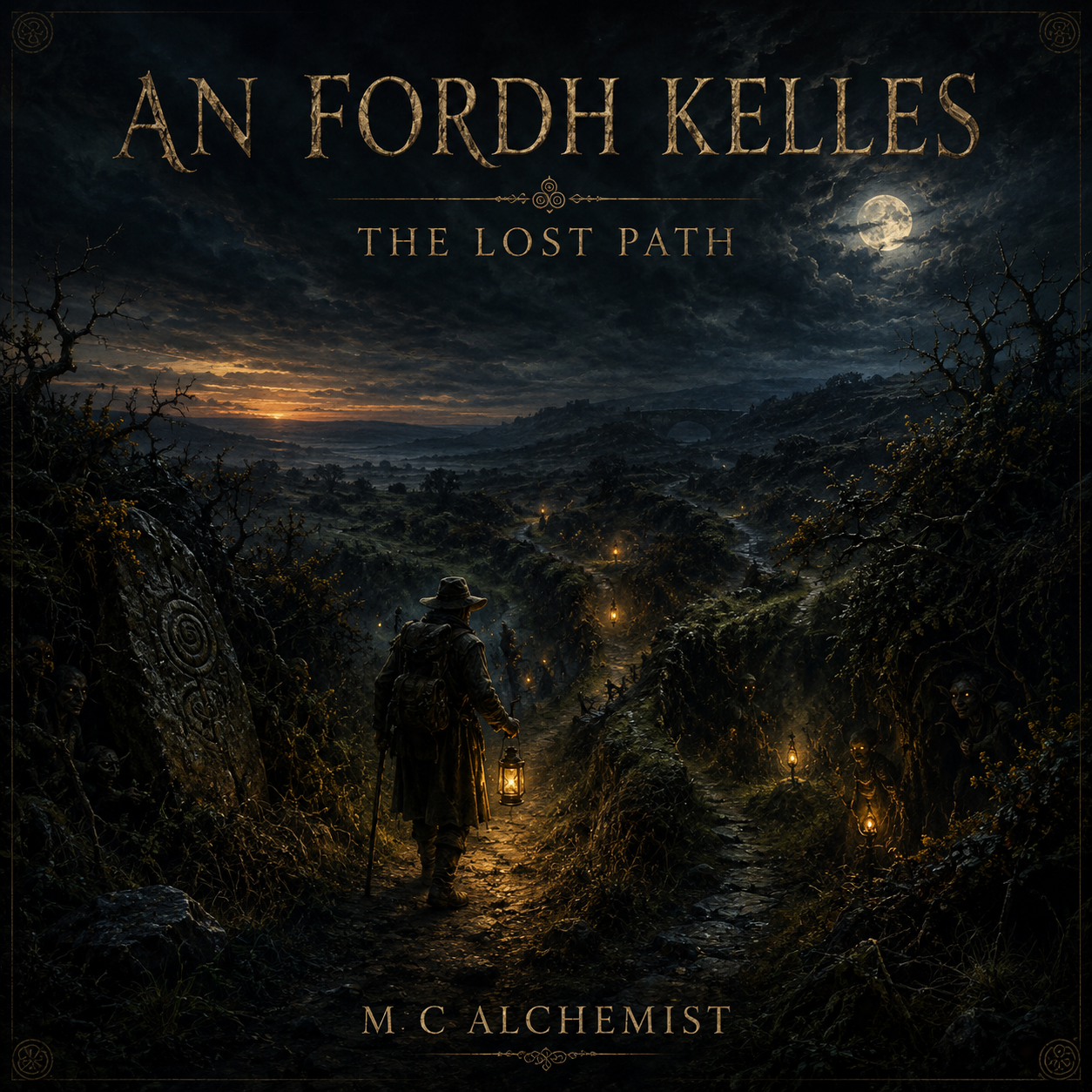
At dusk, a traveller leaves the village by a familiar lane. By morning, the same landscape no longer obeys distance, direction, or time. Piskie lights, borrowed belongings, vanished paths, an impossible bridge, a fairy dance, and sleep beneath the hawthorn turn one night's walk into a passage from which memory returns only in fragments.
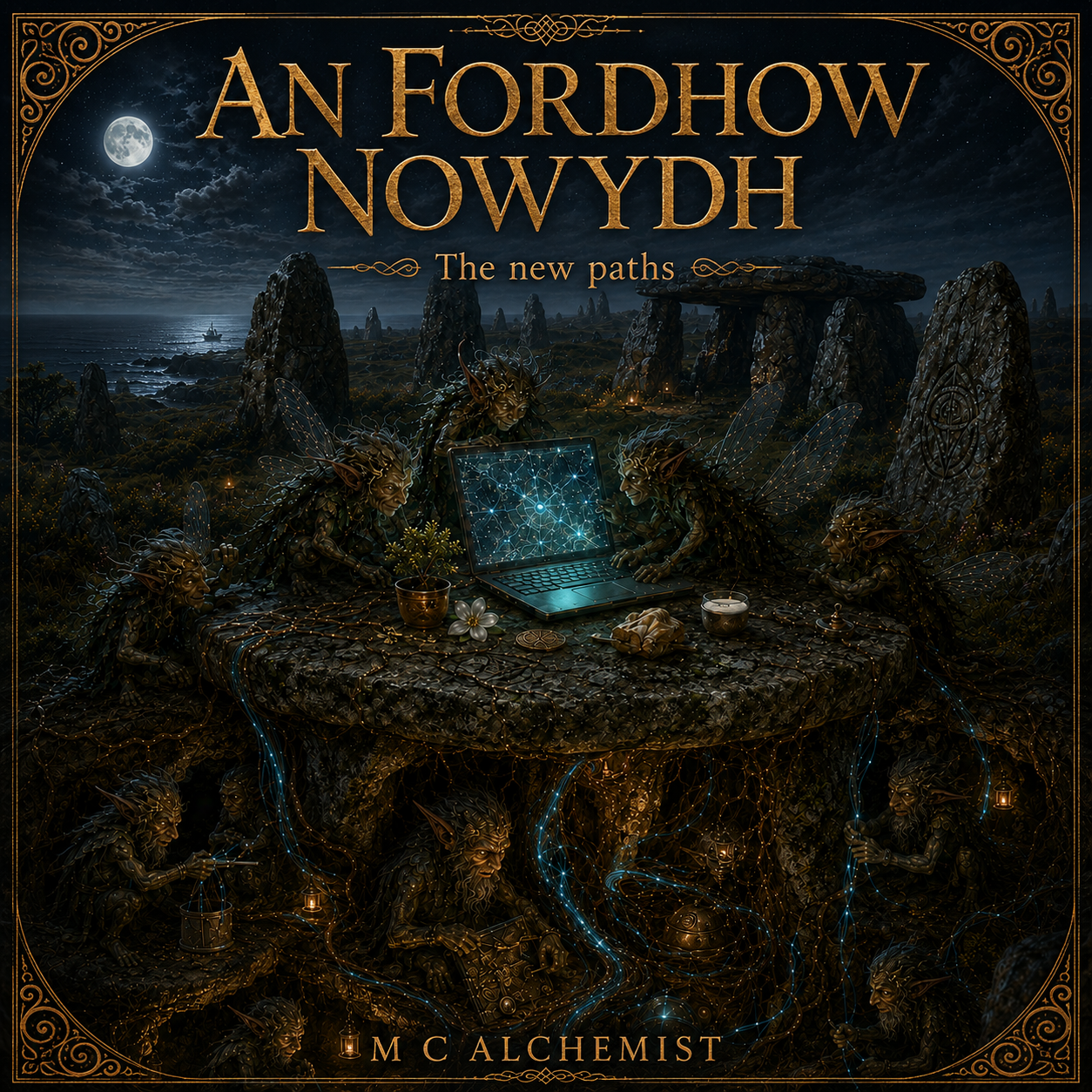
Humanity placed wealth, memory, identity, territory, speech, history, and even the dead inside its machines. The old beings recognise these systems not as an artificial world, but as a new inhabited landscape: another web of paths, chambers, thresholds, treasures, names, echoes, and trespass.
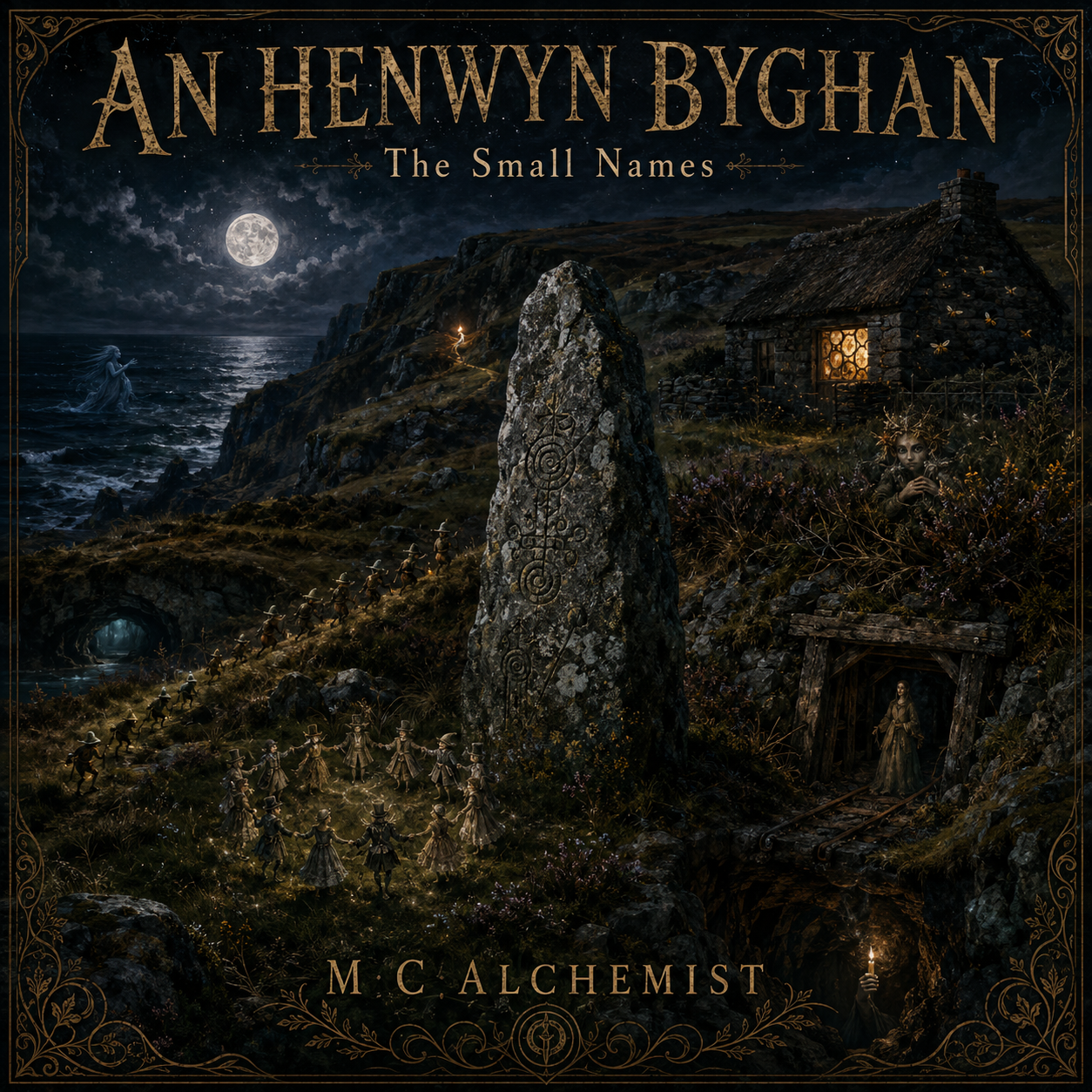
The land remembers before people do. Its stones, wells, cliffs, houses, mines, paths, and place-names preserve the outlines of beings whose stories have nearly faded. This album speaks those small names aloud—not as a catalogue of creatures, but as an act of remembrance.
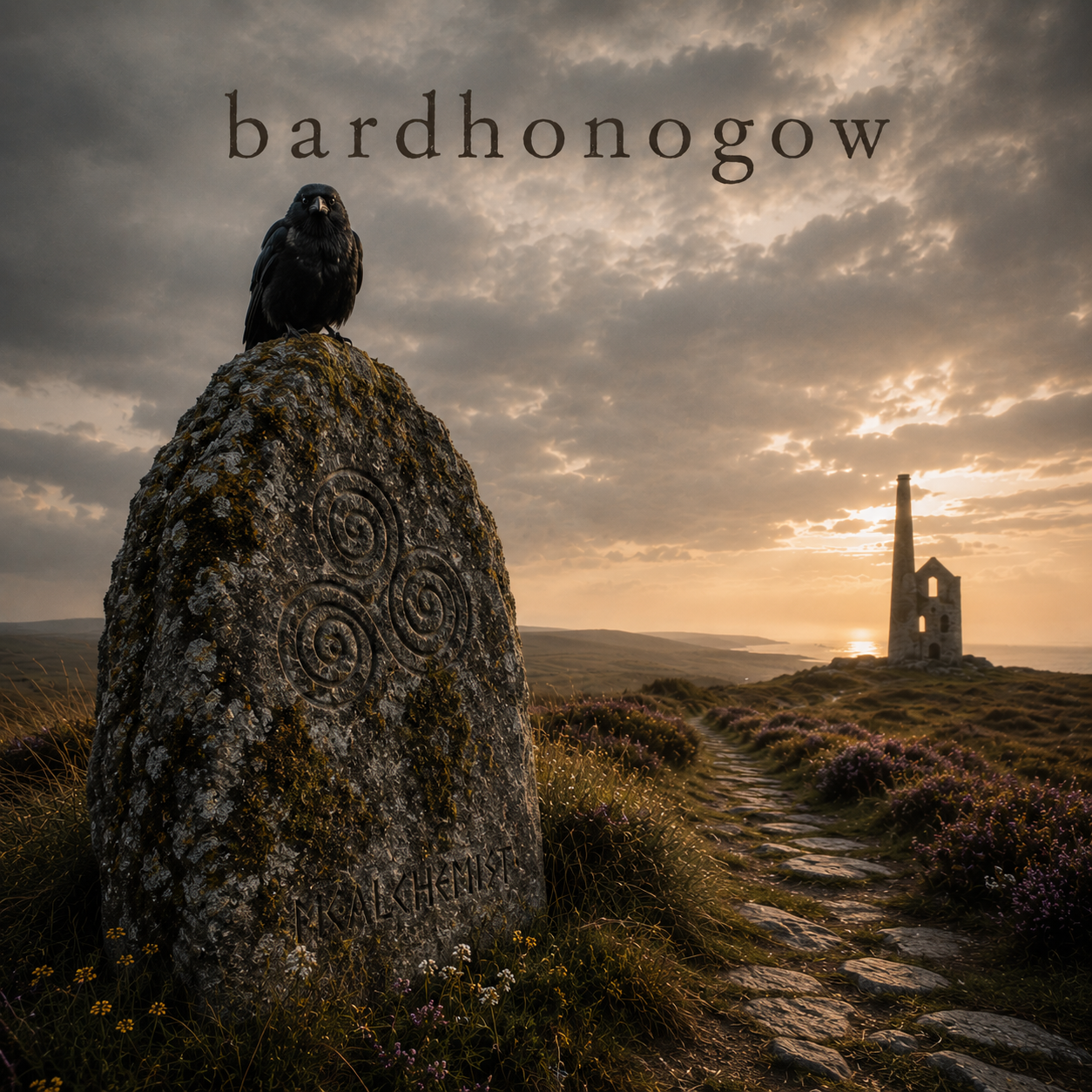
bardhonogow — an evolving collection of short spoken pieces in Kernewek and English, moving between landscape, memory, humour, nonsense, weather and quiet observation.
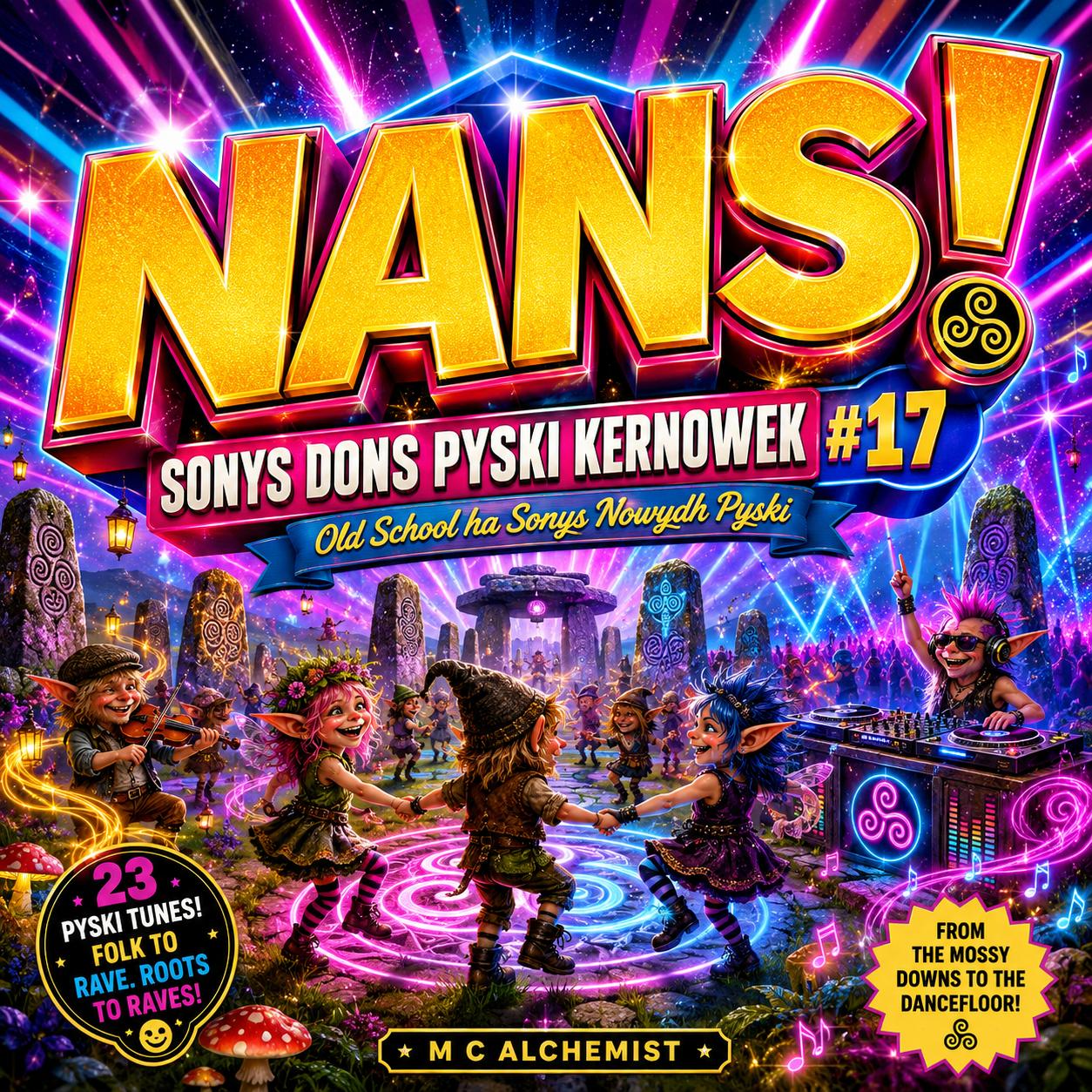
NANS! Sonys Dons Pyski Kernowek #17 — the DJ Piskies are warming up for a possible future transmission. A venue is currently being sought: preferably a mythical location, an abandoned engine house, or somewhere similarly unsuitable for a rave.